
Part IV. What would make you change your mind? Chapter eleven.
Three Signs Agree
Contents of Grounds
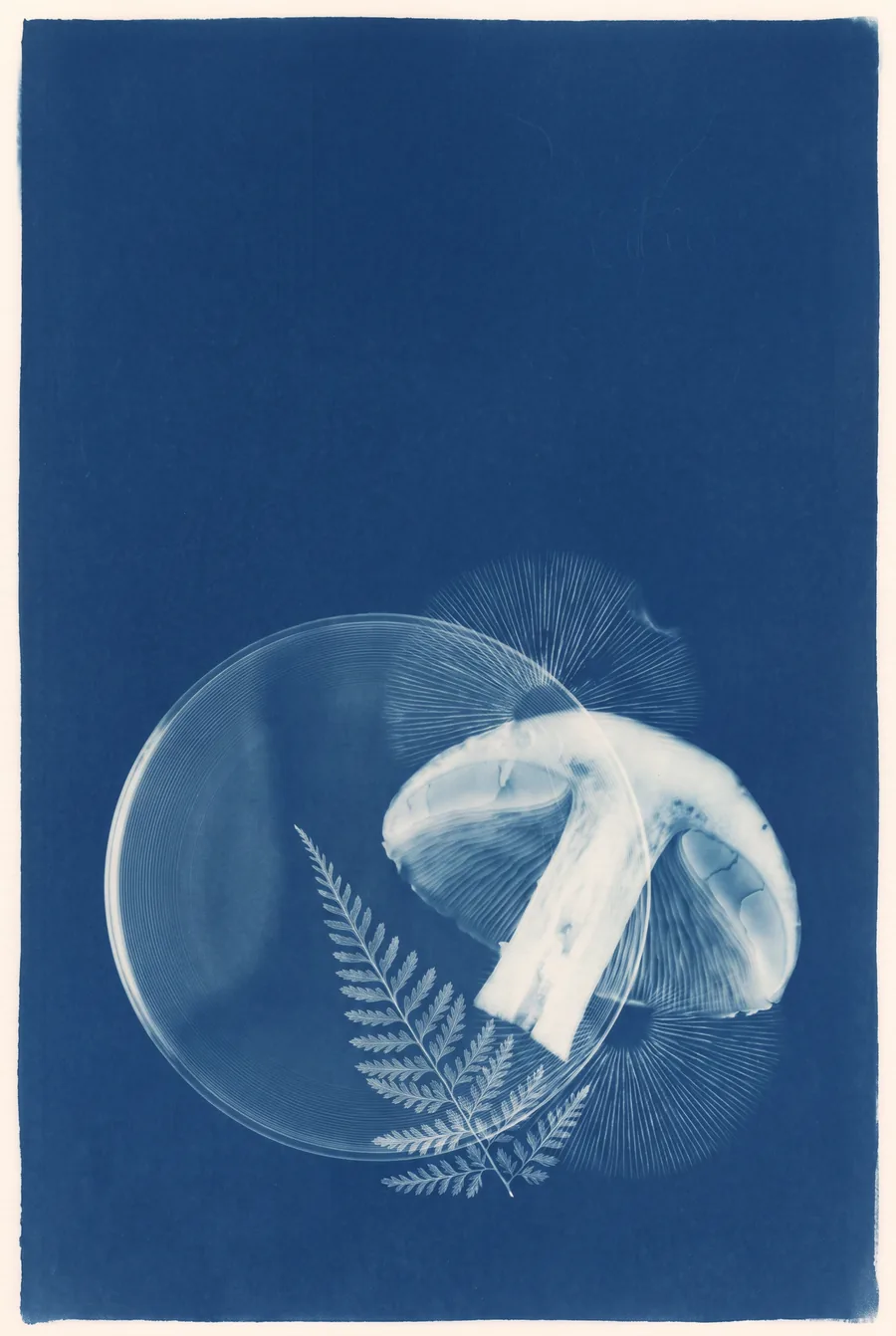
Back from a forest trip, a basket stands on the kitchen table. Timur takes out a mushroom: a pale cap, gills beneath it, a ring on the stem. The stem’s lower part stayed in the ground.
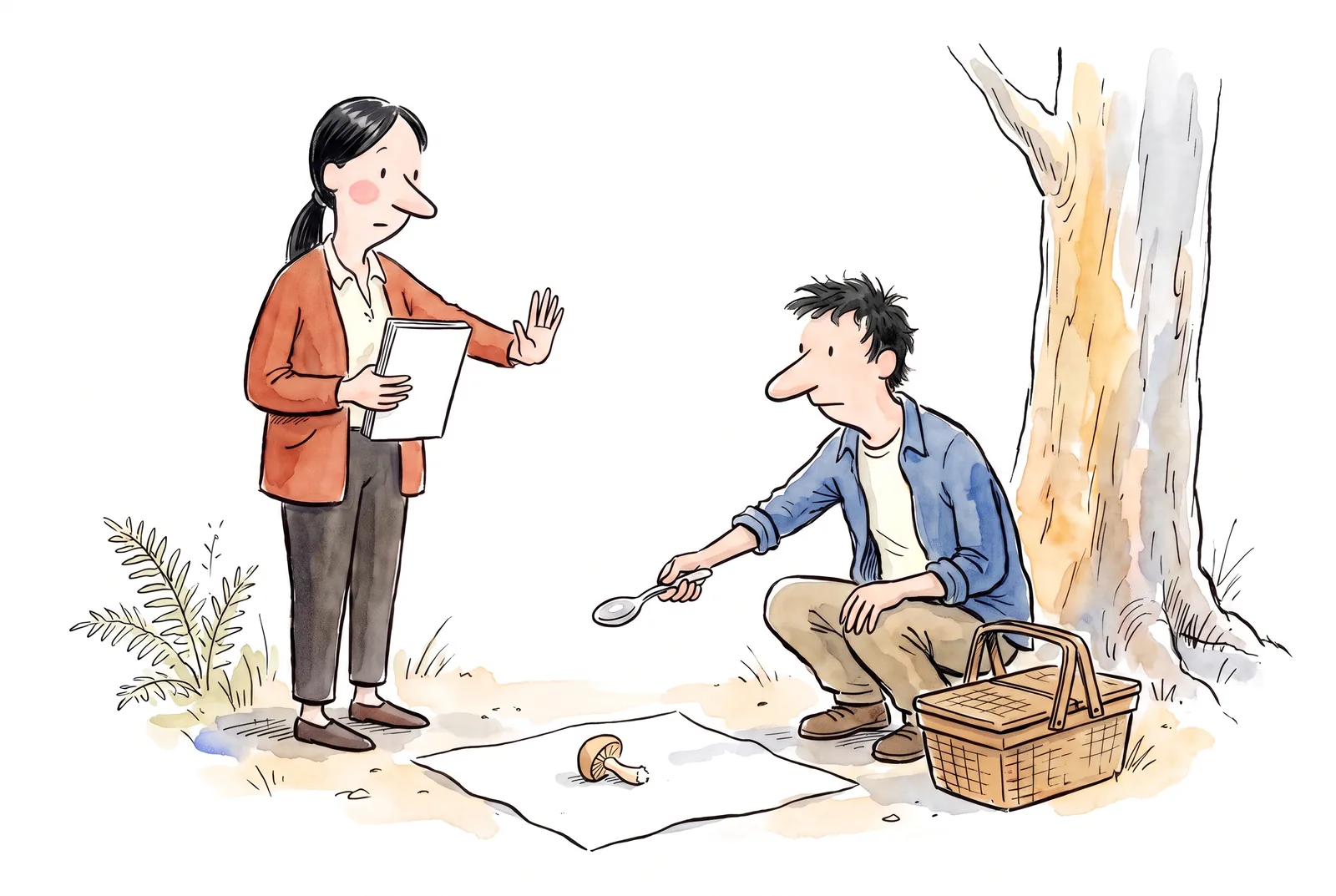
“The silver spoon did not darken,” he says. “Worms ate it. And it smells good. Three signs, all in favour.”
Dana opens the field guide. The description she reads states the colour of the spore print — the trace left by spores fallen from the cap. They have no such print.
“And what was at the stem’s base?” she asks.
Timur looks at the cut.
Before reading on, decide: three reassuring signs are in, several pieces of information missing. Is that enough to send the mushroom to the frying pan?
What the signs check
Timur reasons in order. He remembers three rules: a poisonous mushroom must give itself away by darkened silver, worms will not eat it, its smell is unpleasant. He found nothing of the sort and concludes: the mushroom is edible.
But before counting passed checks, ask whether the rules themselves can be trusted.
A silver spoon is no universal indicator of mushroom poisons. Feeding traces show another creature ate the mushroom but do not establish its safety for humans. A pleasant smell guarantees no edibility either. These signs may give no warning of a dangerous mushroom at all.
Timur truly noticed something. The mistake creeps in at the move from observations to conclusion. Between “worms ate” and “humans may eat” stands a rule that cannot be trusted. Two more unreliable signs do not fix that move.
The field guide serves another task: helping establish which mushroom we face, by characteristic traits. That may take information about the cap, gills, stem, spores and where it grew. What matters is a set of traits telling similar species apart.
We will not identify the basket’s mushroom: this chapter replaces neither a forager’s reference nor a specialist’s help. We need to understand what Timur’s confidence rests on and which grounds Dana still lacks.
Not seen does not mean absent
Dana reads about the stem’s base. In some mushrooms there is a volva there — a veil remnant that may look like a sac or a cup. But in their specimen the stem’s lower part is missing. So “no volva” cannot be written down. They never examined the needed part of the mushroom.
A similar story with spores. Gill colour and spore-print colour are different traits; one cannot simply stand in for the other. The needed observation has not yet been made.
That does not mean getting the print would necessarily pin down the species. It would add one trait to weigh with the rest. Matching on one count does not replace identification.
In the Pluto chapter we already told lack of information apart from mismatch with a criterion. Here the distinction is the same: “we did not see the stem’s base” does not mean “there was nothing characteristic at the base”. A gap in observations cannot be turned into a handy answer.
Timur suggests counting: three signs for, two checks undone. But this is no vote. What matters is whether each trait helps tell a safe option from a dangerous lookalike.
Unknown does not mean inedible
“So you think it is poisonous?” Timur asks.
“I do not know what mushroom this is. So we will not eat it.”
These two sentences say different things. The first speaks of Dana’s knowledge. The second, of her decision.
From our failure to identify the species it does not follow that the mushroom is poisonous or inedible. But deciding to eat it takes reliable grounds. A mistake here may cost too much, and an unknown mushroom can be declined.
So the rule “do not eat until established edible” needs no prior proof of poisonousness. It lets us act short of information without passing caution off as knowledge of the mushroom’s properties.
Identifying the species and finding out whether the mushroom suits food are not one and the same question either. The second needs reliable information on edibility and conditions of use. One name on a found page is not enough.
Dana may take a definite decision while keeping the answer uncertain. There is no contradiction here.
How many independent grounds here
With the signs the first problem showed: they are unreliable. But behind the words “three confirmations” another mistake may hide — counting one and the same ground twice.
Recall the measurement from chapter two. Its result went into the report, from the report into the summary, from the summary into the presentation. All three documents hold one number. With no new measurements made, we face three records of one result.
Their agreement shows the number travelled with no divergence. But if the original measurement held an error, three identical records will not remove it.
A new measurement may add information. And then it is worth finding out whether it repeats the old error’s cause. Another person with another instrument may still use the same wrong standard or the same mistaken correction. Independence cannot be established by merely recounting participants.
With the mushroom signs the case is different. Smell, feeding traces and the spoon’s state are different observations. Calling them one observation just because all three signs are familiar from childhood would be wrong. The rules’ shared origin does not yet prove the results dependent. The signs may well diverge.
But even independence does not turn a bad check into a good one. We need to find out both where the information comes from and how it helps answer the asked question.
So Dana needs the spore print not for a fourth tick. It may help tell species apart in identification. Its value ties to that task, not to a place in the queue of evidence.
An hour with no symptoms
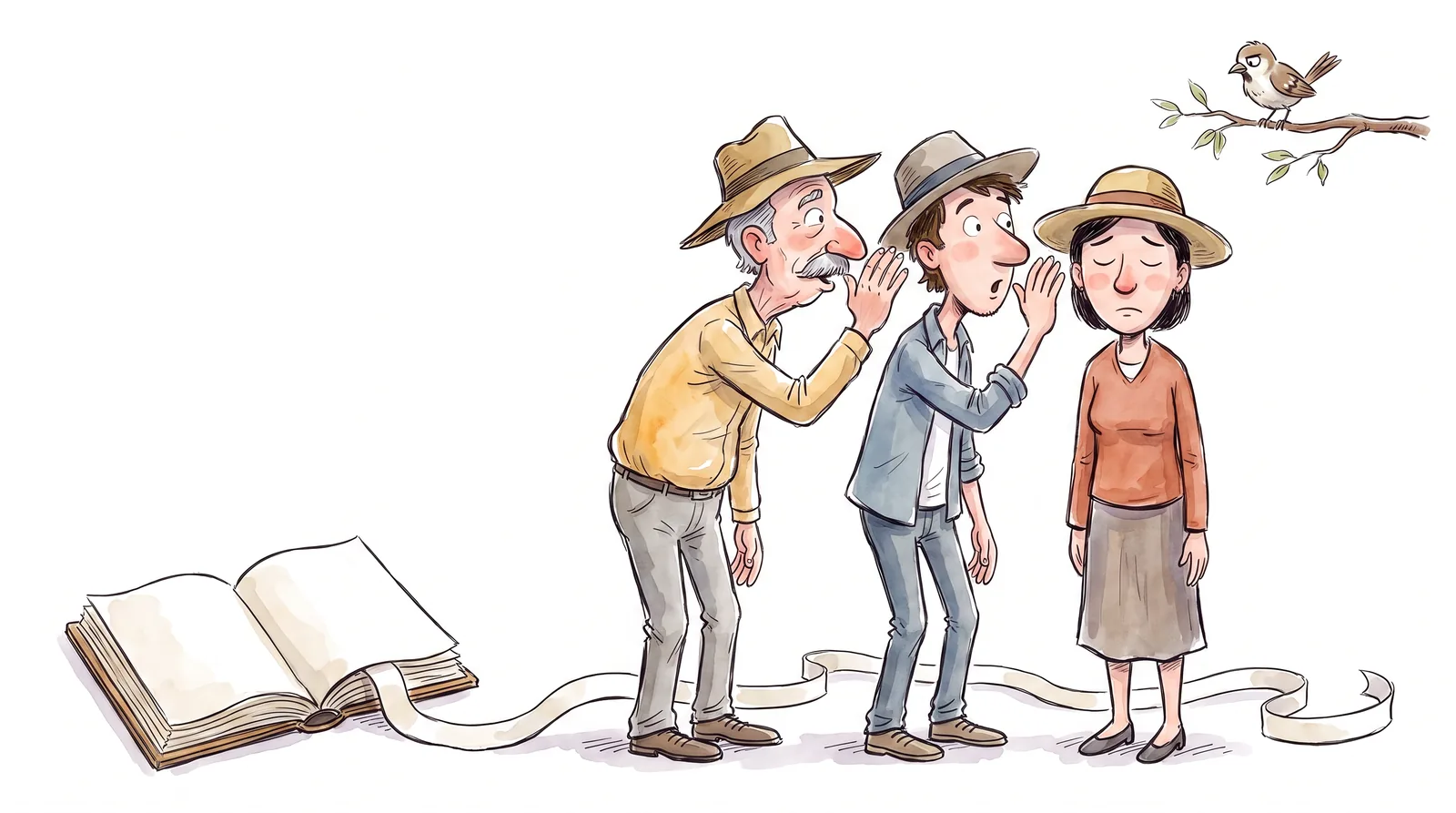
“And if a person ate such mushrooms and feels fine after an hour?” Timur asks. “Is that a check already?”
There is an observation: after an hour the person notices no symptoms. But what follows from it?
Some mushroom poisonings show only after many hours. So it is with death-cap poisoning. Feeling well soon after eating is therefore compatible with dangerous poisoning and does not confirm the mushroom’s safety.
Here the chapter on the number 341 comes in handy again. It passed the check while staying composite. We learned a definite property of the number but would err in ascribing it more. So here: “no symptoms yet” is a narrower claim than “no poisoning”.
By symptom-onset time alone neither the poisoning’s severity nor which poison caused it can be judged. Symptom-onset time alone cannot support such a conclusion.
From this reasoning no advice follows to wait a little longer. If an unknown mushroom is already eaten, seek medical help at once, without waiting for worse. Its safety cannot be tested on oneself.
What will change the answer
Timur sets the spoon aside.
“So three is too few?”
“First we must understand what they confirm,” Dana answers.
Evidence count matters when it is clear how each piece was got and what each is worth. Several reliable observations may strengthen a conclusion. Several retellings may only multiply the original error. And several bad checks may leave unnoticed what needed noticing.
In this scene Dana is right to refuse counting the mushroom edible by signs. And she neither identified its species nor proved it poisonous. Her decision rests on the available information’s limits and the possible mistake’s cost.
Revising the answer about the species takes suitable identification traits and their competent assessment. Revising the eating decision takes still more: grounds to count the mushroom safe under particular conditions.
In the next chapter we return to the cart and plan a check in advance: we will state which results help pick between two explanations, and which leave the question open.