
Epilogue.
An Answer Together with Its Grounds
Contents of Grounds
In the prologue you wrote down one phrase — something ordinary you were sure of. Take it out and read it once more.
Your opinion may not have changed while reading. Or you may now want to add a hedge, or check what once seemed obvious. First three prologue examples, then yours.
What changed in familiar phrases
“The house was built in 1968.” Where does that date come from? It may stand in a registration certificate, a listing, or a plaque by the entrance. But first we must read what exactly is named: the year construction finished, of commissioning, or of the document’s issue.
Then we can find out how the entry reached that source. Several identical dates do not yet mean several independent confirmations: the information may have been copied from one document. It also matters whether the entry concerns the wanted building.
After checking, the source phrase may stay. But until the document is checked, it is more exact to say: “This source states 1968; what the date means exactly and where it comes from I have yet to find out.” We already know where to continue the search.
“In the mornings another road gets you to work faster.” Which trips do we compare? How many were there, on which days and at what time did we leave? Did we measure door to door, or only time in motion?
A few lucky trips may hint the new route is worth trying. For a surer conclusion we must compare it against the old one under matching conditions, allow for time spread, and decide in advance how to judge results. One smaller average is not enough to promise a faster way every morning.
The conclusion may have to narrow: the other route is faster on certain days or with an early start. Or data may so far fall short of a pick. The needed hedges will come from observations, not from a wish to save the phrase.
Saying “baram” is wrong. In chapter six we told usage, norm, reading and artistic choice apart. A shortening’s bare existence establishes no mistake. But neither does a form met in a text become fitting for every situation thereby.
For reading the considered verb forms the reference gives a concrete direction: keep the full or shortened variant the text uses. That is no general rule to pronounce everything literally letter by letter. When we write our own text, that task’s conditions must be taking apart.
So the source blanket condemnation of the shortened form fails checking. We replace it with more exact judgments. That is a substantive change of answer, not a way to declare the old claim right.
In all three cases one question helps find out: what do the available grounds let us say now? Sometimes the answer stays, sometimes it changes. Sometimes a check’s honest result is admitting the question is still open.
Now your phrase
Write beside it answers to the familiar questions. No need to fill gaps with guesses. Where you do not know something, mark what exactly remains to find out.
What exactly do I claim? Pin down the phrase’s meaning enough to see what to check. If a road is “faster”, compared to which, at what time, and for which way of getting about?
Which information backs it? Name a document, observations, a calculation, or a person’s evidence. Where possible, state where they can be seen.
Which conditions do I accept? Say, that the document concerns the same house, the instrument readings suit comparison, and the rule applies to our case. Keep checked things apart from what is so far only assumed.
How did I reach the conclusion? Show the move from information to answer. Read the date yourself? Compared trip times? Applied a rule? Relied on another’s estimate? One reasoning may join several such steps.
What could change my answer? Name a concrete piece of information or a check’s result. Thinking this over in advance helps, while no new data exists yet. If the criterion later has to change, explain why.
Does time matter here? If so, pin down which time you speak of, which information you allow in, and when the conclusion was made. These dates may not match.
After such taking apart the phrase may stay as it was. But now the person across the table finds it easier to grasp why you accept it, and you — to see which questions to it stay unanswered.
What stands behind a short answer
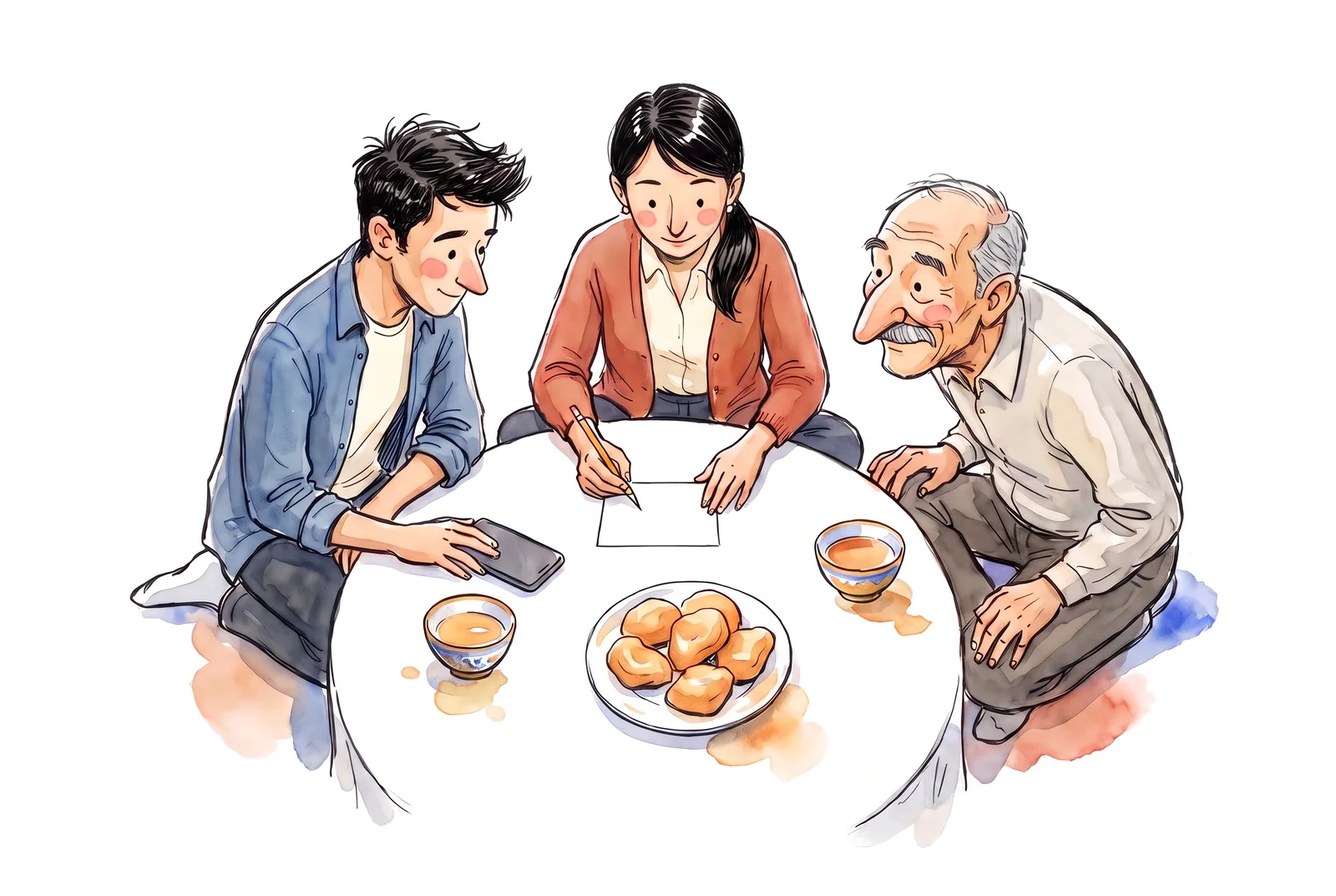
Around the prologue table familiar lines sounded: “I saw it myself”, “I was told”, “It says so”, “I worked it out”. Now each of them can be continued.
After “I saw” — pin down what could be observed and under which conditions. After “I was told” — ask where the teller gets it and on which point he can be trusted. After “it says so” — find out the entry’s meaning and source. After “I worked it out” — show the source data, assumptions and the calculation’s course.
No single line completes a check by itself. But each may start one. We turned to different grounds because the questions differed: to set a part’s size, to read a line, to prove a number’s property, to discuss a musical phrase.
Not every dispute ends in one answer. Still, we can pin down more exactly where the speakers part: in information, in conditions, in reasoning, or in estimate criteria. That alone lets the conversation continue on substance.
What such taking apart gives
In the knowledge interlude we told confidence, groundedness and truth apart. Written-down grounds guarantee no right answer. They too need checking.
A card helps make reasoning open to discussion. Another person may find a gap, suggest new data, or show a mistake. He may also agree, seeing sufficient grounds.
Not everything we know and can do finds words at once. An unexplained impression may start a taking apart; a skill may help notice an important detail. But when we offer others a conclusion, we should explain where possible what it stands on and why it deserves trust.
Returning to the source
The name Arxo recalls the Greek archē — beginning, source, first principle. For this book the tied question of grounds of knowledge matters above all.
With time an answer grows familiar. We remember a date, a route, a formula or a rule, while the circumstances in which we learned them fade. It seems we always knew it.
Returning to the source means seeing again behind a ready phrase an observation, evidence, an accepted principle, someone’s work. One memory of where we first heard the answer is not enough. We must understand why we trust it now.
Arxo helps trace how a conclusion depends on stated rules and information. But checking the information itself, picking fitting conditions and judging whether the grounds suffice still falls to us. This work’s meaning is keeping the tie between what we claim and what lets us claim it.
Last page
Your prologue phrase still lies before you. Now beside it may stand a document reference, a calculation, an important hedge, or a question for the next check.
You may leave it unchanged. You may rewrite it. What matters is that grounds show behind the answer — and that we can tell whether they suffice.
What do we know, and what does it stand on?