
Part Two. The model is not the source. Chapter six.
What the Model Leaves Out

Contents of Canons
A source preserved as text is not yet a rule that can yield an answer. Principle of the method
Two questions to the same machine, about the same law.
The law is the Social Code of Kazakhstan, the 2023 code that gathers pensions, disability benefits, family allowances and social assistance into two hundred and seventy-two articles. All of them are in the machine, in the sense that their text is there, pinned byte for byte. Whether the machine can answer a question about them is another matter, and that is the chapter.
First question. A woman has twenty full years in the pension system and asks what her basic state pension is in 2026. The code says: seventy per cent of the subsistence minimum for ten years or less, two per cent more for every year beyond ten, up to a ceiling. The subsistence minimum for 2026 is fixed by the budget law at fifty thousand eight hundred and fifty-one tenge. Give the machine the twenty years and that figure; the figure is yours to supply, and the machine does not check it here. What pension does the formula give?
Forty-five thousand seven hundred and sixty-five tenge ninety tiyn: established, with article 206 beside the answer and the rule that produced it, seventy per cent plus twenty. Ask about a different figure, forty-five thousand seven hundred and sixty-five even, and the machine says not established; it is not splitting the difference, it is computing.
Second question. A family has a member with a severe disability, cannot cope, and asks whether it qualifies for the special social services the same code promises in its articles one hundred and thirty-one to one hundred and forty-one. Ask the machine whether the family qualifies.
Nothing. Not “not established”: nothing. There is no question to ask. Search the model for “special social services” and it returns the text of the articles, eleven of them, and not a single rule. The machine can show you the law. It cannot apply it, because nobody has yet written those articles into a form it can run.
Two silences
From outside, the two answers can look alike. Both are the absence of a yes. Inside the machine they are as different as a court that heard your case and found nothing for you and a court that has not opened the file.
“Not established” in the first sense is the answer of the earlier chapters: rules ran, and none reached the conclusion. That answer comes with a list of what was missing, and it is a statement about your case under the model.
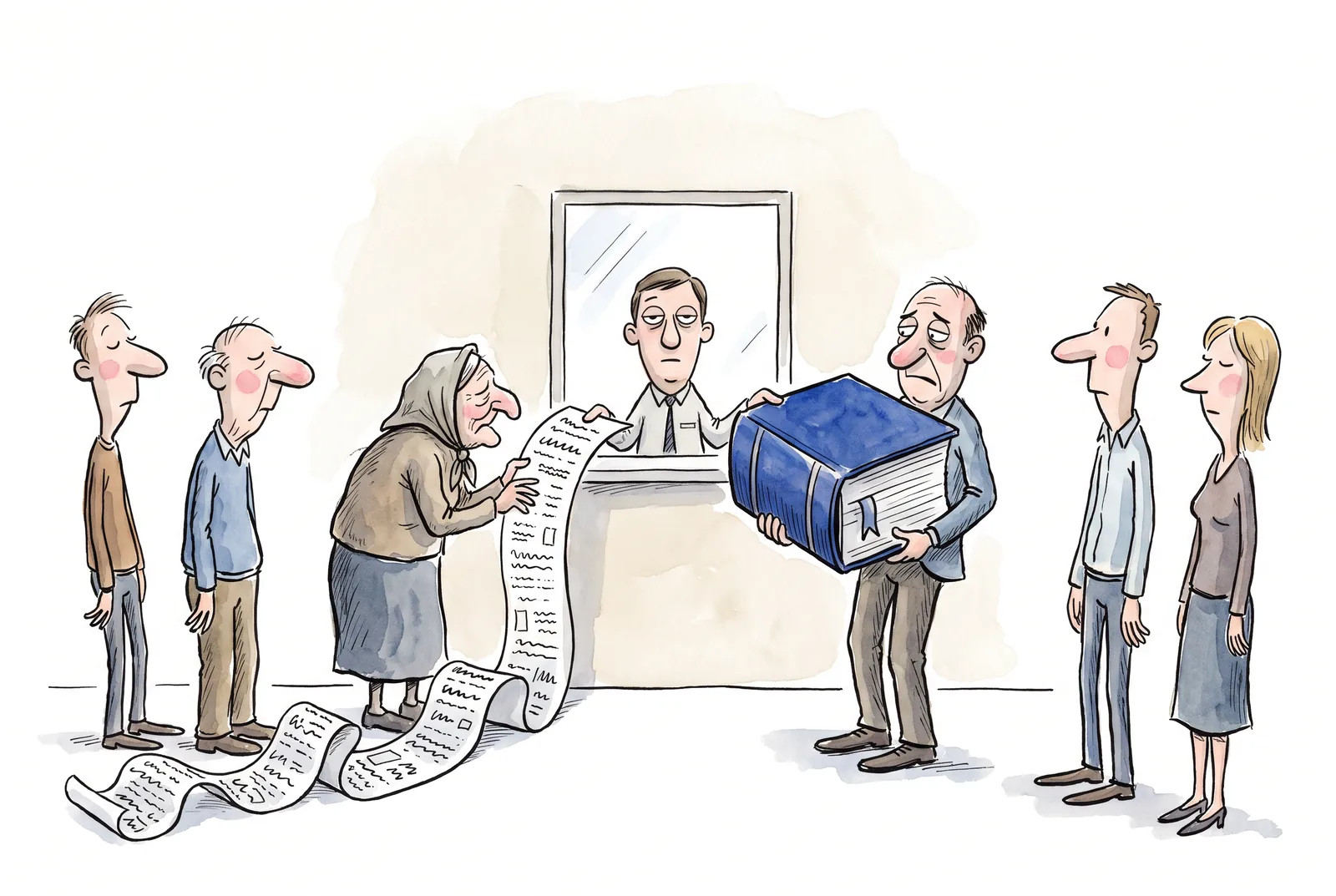
The second silence is not about your case at all. It is about the model. The article’s text is in the model; no rule applies it; and a machine that let you confuse the two would be lying by omission every time it said “not established”. So the machine does something the earlier chapters did not need: before it answers anything, it tells you how deep the model goes. Its own catalogue line for this code reads, in its own words: Social Code, executable 180. At least one executable rule is linked to each of these 180 articles. The remaining 92 articles have no linked executable rules. This measures formalisation coverage, not a guarantee that every query involving a covered article will produce a conclusion. These counts describe the model snapshot recorded for this experiment.
That number is not a claim the author makes. It is computed from the model itself, article by article, by counting what refers to each one.
The measure
Each article in a pinned source receives a mechanically derived coverage classification.
Executable: at least one executable rule refers to the article; whether it produces a conclusion depends on the case and question. Article 206 above. This says nothing about whether the whole article was carried over; one rule tied to one sentence is enough for this coverage classification. The Regulation on air passengers had all of its articles at this level, which is why the second chapter never met the second silence.
Interpreted: a rule exists, but only under a reading that must be switched on; on an ordinary case the article yields nothing. Gellius’s chapter has one such article: the paragraph with the two speeches.
Anchored: something refers to the article, a fact or a closed list, but no rule; the article can be pointed at, and nothing is derived from it. Judge Wood’s statement of the facts in the fourth chapter is anchored: the machine can cite it, and nothing follows from it.
Source only: the text is pinned and nothing refers to it. The Social Code’s ninety-two are all of this kind, and for all ninety-two nobody has written down why. That is the honest debt of the model, and the measure prints it as a list of ninety-two article headings rather than a percentage.
Excluded: the article is deliberately left out of this edition of the model, and a reason is recorded: repealed, or not yet in force.
And a dash: the article was never brought into the model at all, not even as text. The Laws of Chess in the fifth chapter cover six articles and leave six outside.
The measure is not a grade. A dash is not worse than “excluded”, and “anchored” is not a failure. It is a map of where the machine can speak, and the point of it is the sentence the specification forbids: a model must never say it is complete while part of the text is text only. These numbers may change as the model is extended or revised. The requirement to report them remains.
The bytes underneath
There is a second question the machine answers before it answers yours: what text is this model built on, and how was that text obtained?
The Social Code in the model is the Russian consolidated edition as it stood on the twenty-seventh of August 2026, taken from the left column of the official legal portal’s comparison page, with the page’s hash pinned. The text is official. The bytes are not the bytes of the official publication; they are an extraction from a web page, and the model says so, in a field with a name: pinned unofficial copy.
That is the commonest kind in the corpus; the Latin of Gellius, the Leonard opinion and the Laws of Chess are all copies of one kind or another, and the experimental notes has the census. None of this makes an answer wrong. Each kind changes what an answer is evidence of. A model built on official bytes lets you argue that the machine misread the law; a model built on an unofficial copy lets you argue, first, that the extraction departed from the publication, and the machine has handed you the fingerprint to check.
What the author chose
Go back to the subsistence minimum you supplied. The same corpus holds the 2026 budget law, pinned, with that figure in it, and the two are not wired together for this rule: the rule for article 206 takes the amount as a fact of the case, “applicable to the person”. The author chose to have you supply the minimum rather than have the model fetch it, and a different author might have wired the budget law in. The pension you were quoted is right if the figure you supplied is; the machine did not check that.
Which chapters of the code are executable is a choice too. The author formalised the addressed social assistance, the disability and care benefits, the special professional payment, the basic pension and the contribution rates, and left the rest as text. The package says this in its own header and calls it “movement towards a full act, not a claim that all two hundred and seventy-two articles run”. The measure holds the author to that: an article cannot slip from executable to text only without the change being refused, and cannot be declared out without a reason.
Every figure in this chapter was computed by two programs written independently of each other, and their answers agreed to the byte; the measure itself is counted by a script, not proved by anything, and the experimental notes says how it is guarded.
What is left to argue about
The second silence has an address now. If you are the family in the second question, the machine has told you, before you asked, that articles one hundred and thirty-one to one hundred and forty-one are text only, that nobody has declared them out, and that nobody has said why. You cannot argue with the model about your eligibility, because the model has no opinion, and bringing more documents will not help, because nothing reads them; you can argue with the author about the ninety-two, and the measure has given you the list.
If you are the woman with twenty years, you have a number, an article, a rule, and a hash. What you do not have is the machine’s word that the subsistence minimum you gave it was right, or that the extraction from the portal matches the official publication, or that the one hundred and eighty executable articles were formalised correctly. The measure counts derivation, not correctness. That is the eighth chapter’s subject, and the eleventh’s.
For now the lesson is the one the specification wrote into its own rules: the model may be thin, and it may be built on a copy, but it may not hide either. “Not in the model” and “the law is silent” are different answers, and the first must never be dressed as the second.